SSSUK members visit the British Museum
Professor Heather J. Sharkey
On Wednesday 19 February 2025, thirteen members of the Society were treated to a tour of the British Museum’s Sudanese collections by Dr Zoe Cormack, Curator (Africa), and Dr Loretta Kilroe, Project Curator (Sudan and Nubia). Our two knowledgeable and gracious hosts brought members to library and collections rooms where they were able to examine Nubian, South Sudanese and Darfurian materials that are not on public display.
A stunning example of what they showed us was a Kerma beaker made of smoke-fired clay around 1500 BC and excavated near Dongola.
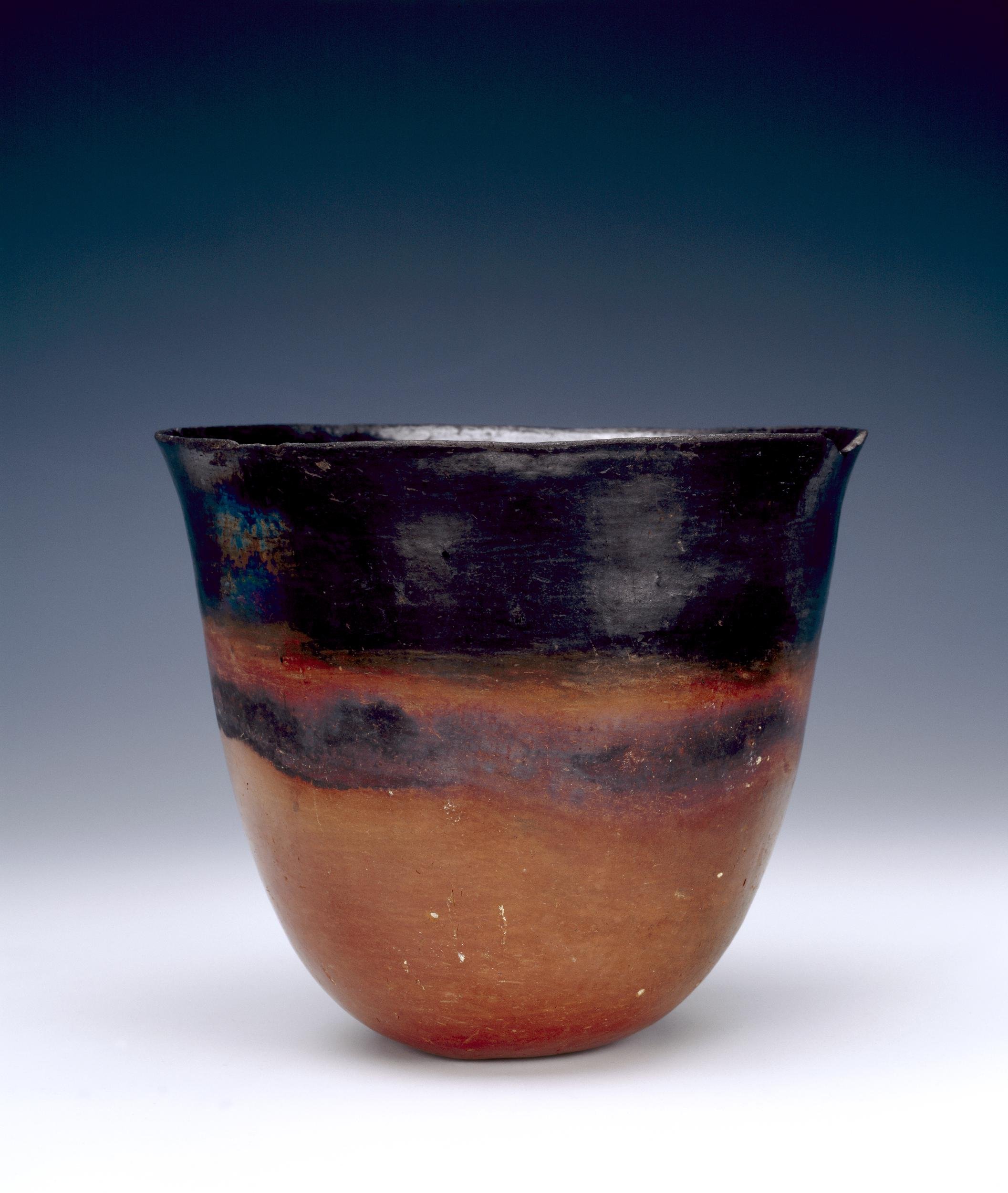
Kerma ware pottery jar, black-topped with everted rim, 1750BC-1450BC (Classic Kerma period) (EA55426) © The Trustees of the British Museum. Shared under a Creative Commons Attribution-NonCommercial-ShareAlike 4.0 International (CC BY-NC-SA 4.0) licence.
Another exquisite item was made by the Azande at some time before 1867: a leaf-shaped, delicately incised woman's iron and copper knife, intended to be worn on the arm.
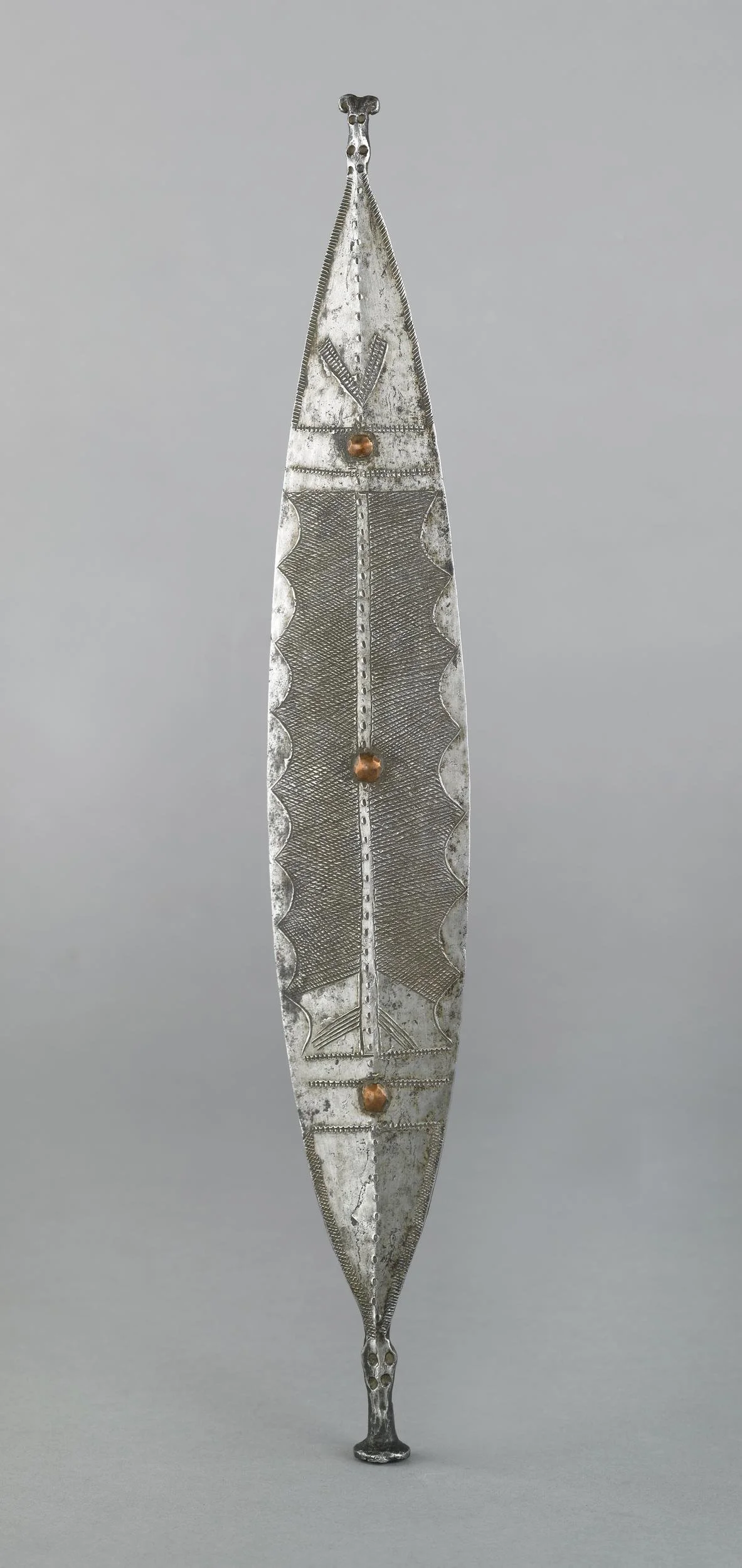
Woman's knife worn on arm, currency (?) made of iron, copper, 1867 (or earlier) (Af.4460) © The Trustees of the British Museum. Shared under a Creative Commons Attribution-NonCommercial-ShareAlike 4.0 International (CC BY-NC-SA 4.0) licence.
Some of the most interesting materials were not necessarily the most beautiful or interesting to look at; only when one knows their purpose and backstory can one appreciate their significance. For example, Zoe showed the group what she called one of her own favourite objects from South Sudan: a divination stone or rainmaking pebble, made by the Bari people some time before 1905.
Other humble, everyday objects included a clay coffeepot or jubbana from northern Sudan, dating from the mid-nineteenth century — one of many such coffeepots in the British Museum’s collections.
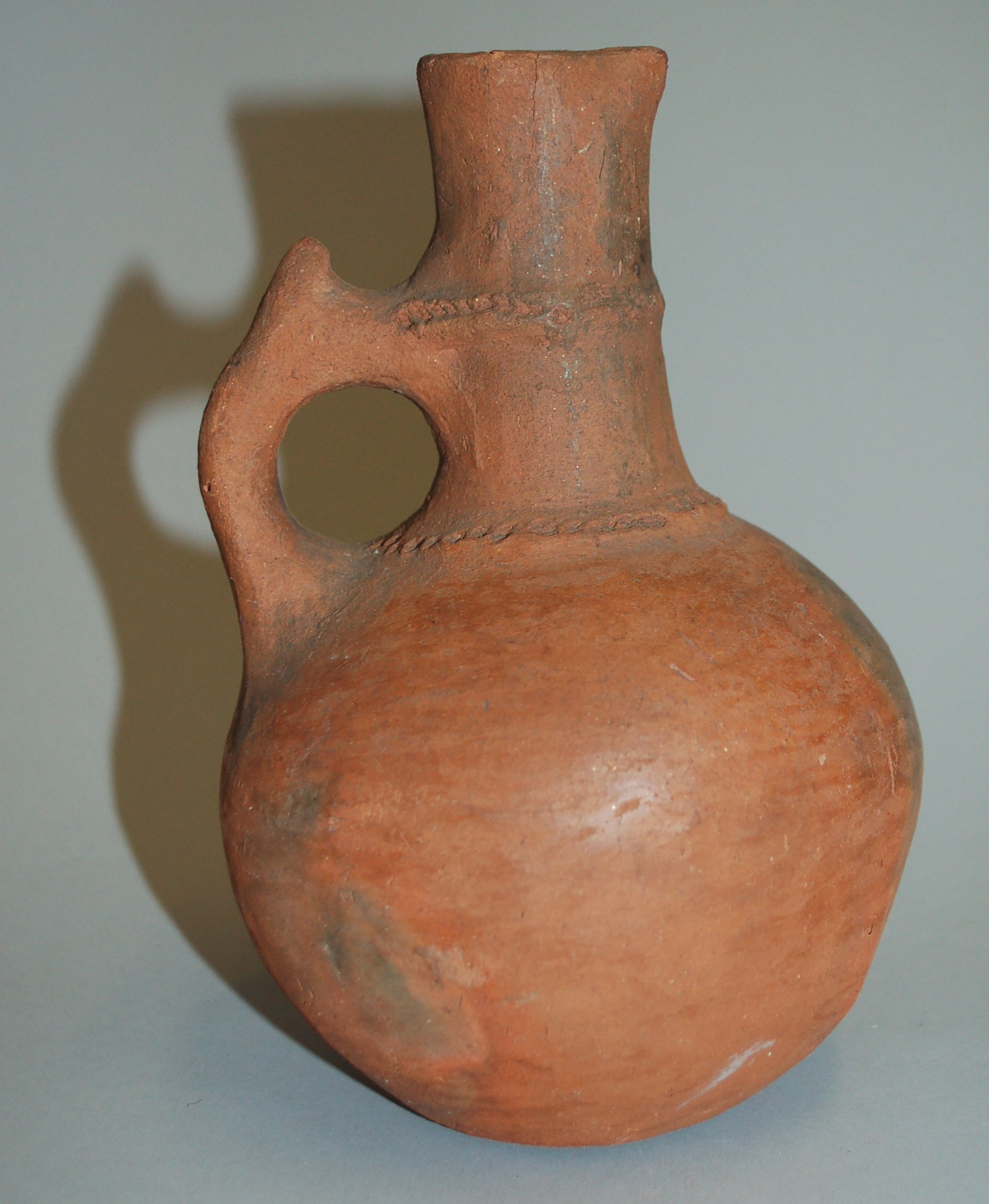
Coffee pot with handle; made of red earthenware. Incised decorations around the neck, 1867 (or earlier) (Af.4432) © The Trustees of the British Museum. Shared under a Creative Commons Attribution-NonCommercial-ShareAlike 4.0 International (CC BY-NC-SA 4.0) licence.
Loretta explained the significance of a striking Meroitic pot, from the kingdom of Kush (c.570 BC–AD550), which has a pattern of giraffes incised in the clay. She recently published an article about such giraffe motifs in the Journal of African Archaeology. Since giraffe imagery does not seem to have been prevalent in the “high” or elite culture of ancient Egypt and Nubia, she suggests that this pot and others like it may have reflected a popular religious culture that prevailed among Kushite women especially.
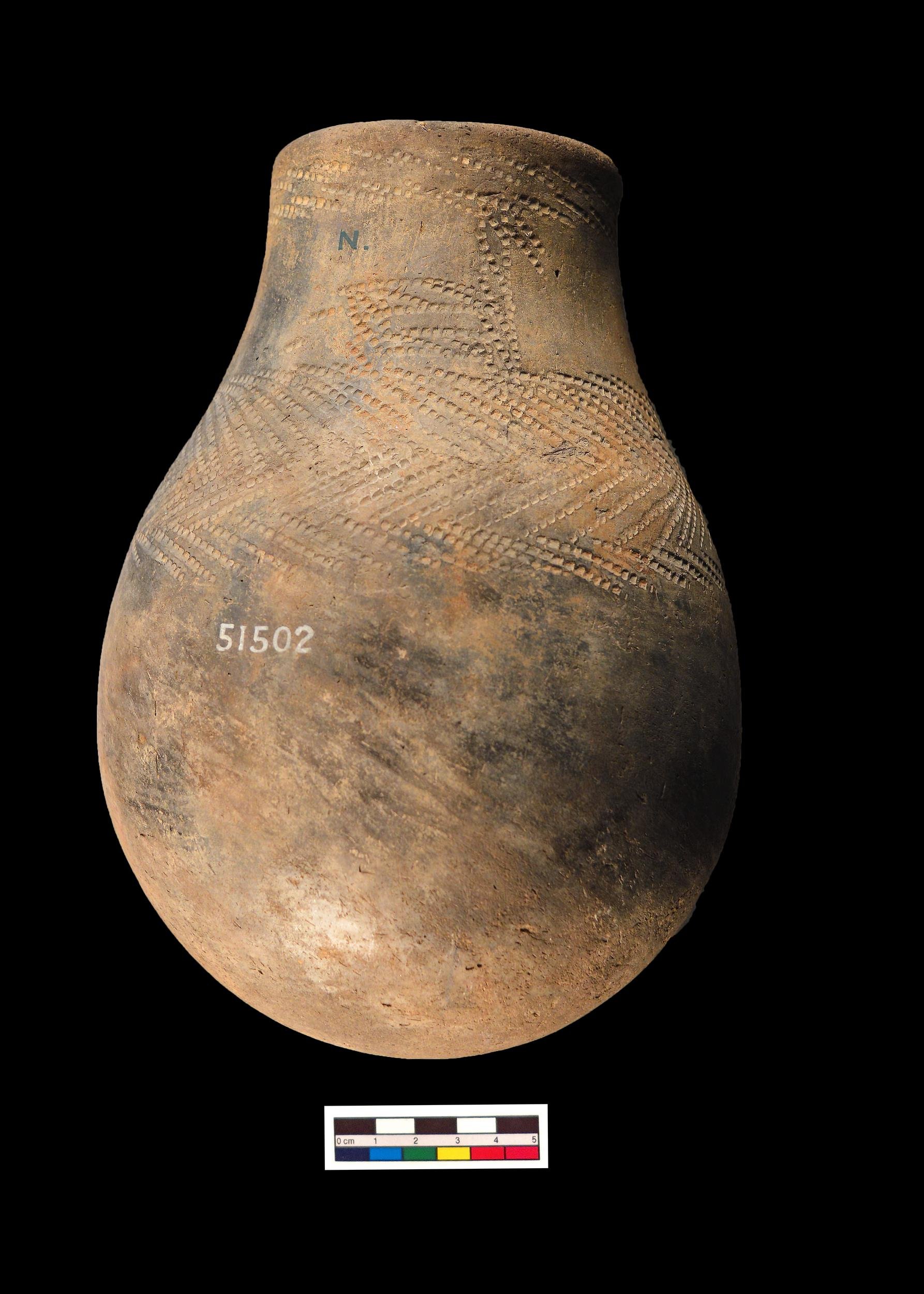
Black burnished jar from Faras with impressed giraffe decoration, c.570 BC–AD 550 (Meroitic) (EA51502) © The Trustees of the British Museum. Shared under a Creative Commons Attribution-NonCommercial-ShareAlike 4.0 International (CC BY-NC-SA 4.0) licence.
Also displayed was a woollen loin-cloth dating from between 600 and 850 CE and excavated from a burial at Kulubnarti, an island in the Nile about 100 miles south of the Egyptian border. In that period, the Nubian community at Kulubnarti was part of the Christian kingdom of Makuria.
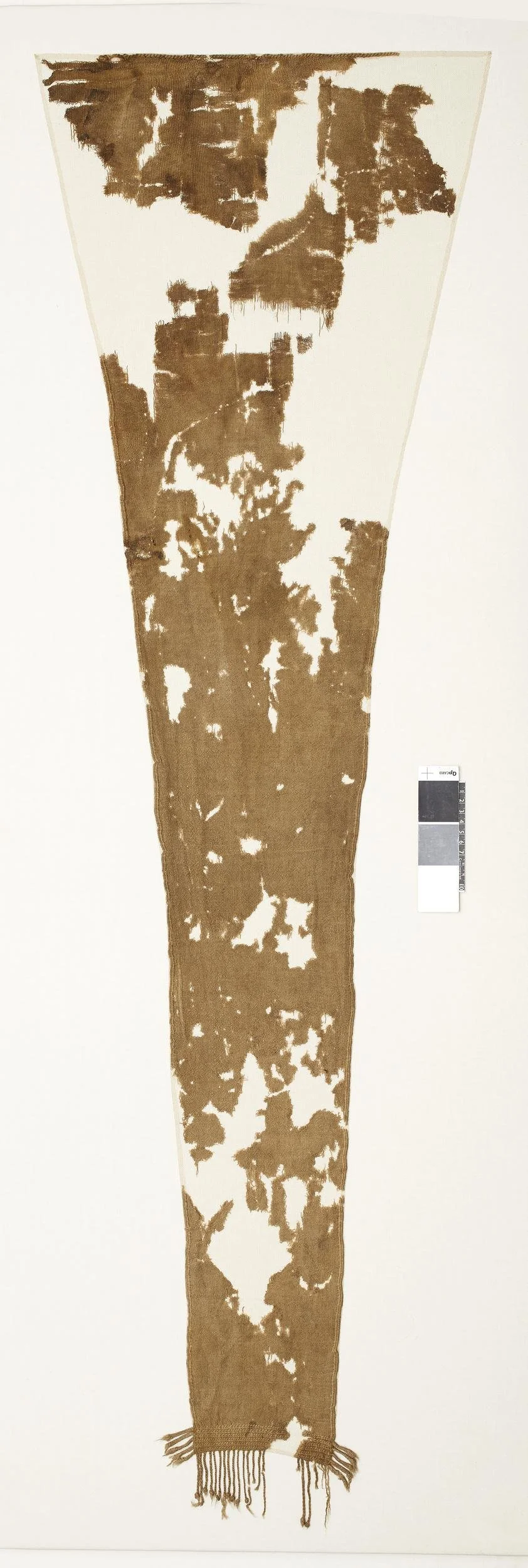
Woven loin-cloth made of natural undyed wool, light tan in colour, excavated at Kulubnarti, Sudan, 600 × 950 CE (Early Christian Period). Originally, this was a fine garment with very even spinning and weaving. (EA77321) © The Trustees of the British Museum. Shared under a Creative Commons Attribution-NonCommercial-ShareAlike 4.0 International (CC BY-NC-SA 4.0) licence.
Several visitors later spoke about how inspiring the day was: “Brilliant! I came away energized and bursting with ideas;” “very interesting and useful”. We send our deep thanks to Loretta and to Zoe for giving so much of their time and expertise during the visit.
We hope to be arranging more such visits to Sudanese collections for members so please keep an ear out for any new updates.